

With the arrival of October cold, wind, and dampness, the body begins to demand entirely different food. Light summer salads no longer provide a feeling of comfort, while heavy meals result in unnecessary and unwanted drowsiness. In the Vedic culinary tradition, autumn is a time when cool and dry energy takes hold. Many beverages—such as autumn teas—and something warming for lunch or dinner help neutralize it.
The key secret to autumn comfort lies not only in hot drinks and dishes, but also in properly chosen spices that warm, stimulate internal heat, and make food satisfying without a feeling of heaviness.
Today, we will break down four freely available spices, each solving a clear everyday task in your kitchen.
The 4 Spices of Your Kitchen’s Autumn “Wardrobe”:
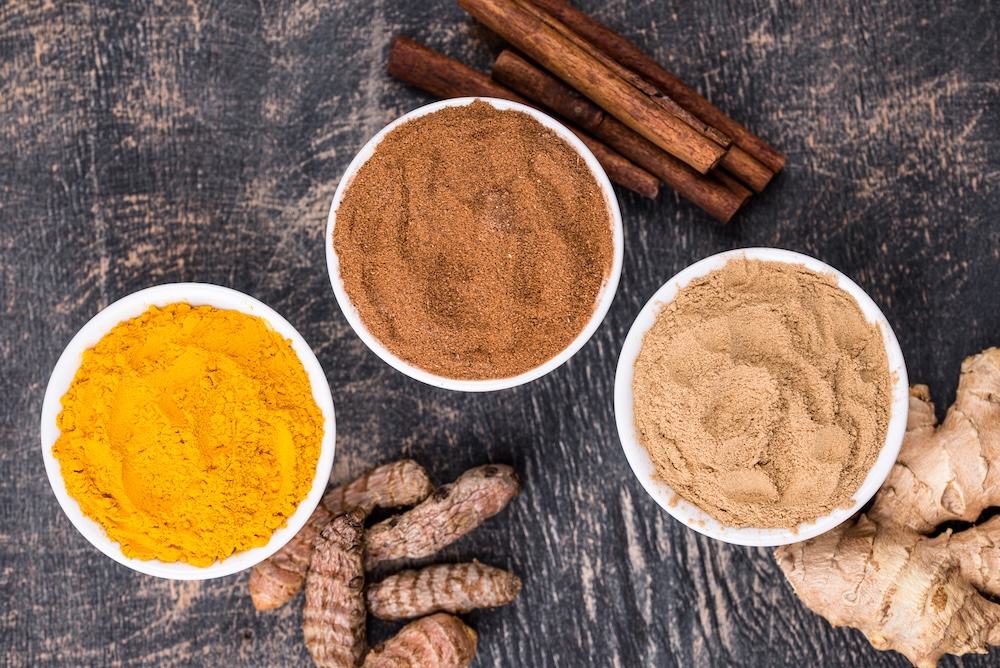
- Ginger. This spice helps you stay warm at dinner: Ayurveda considers it the primary “warming” spice. Ginger instantly dispels the internal cold created by an excess of the Tridosha Vata, gives a sensation of warmth in the limbs, and awakens natural appetite. Fresh ginger and dry ginger powder have their own distinct features in Ayurveda, so it makes sense to familiarize yourself with them to understand how they align with your constitutional type.
- Cumin (Jeera). This spice makes food more satisfying without heaviness, and helps you easily digest dense autumn ingredients (such as legumes, root vegetables, and grains)—which, without added spices, can be difficult for some people to digest. Cumin can also be helpful when experiencing bloating. This unique spice possesses a warming potential of action on the body and imparts a deep, nutty aroma to dishes. It is important to note that cumin is by no means caraway, and it is vital to be able to distinguish these two spices both visually and in terms of how differently they perform in dishes.
- Turmeric. This is a most unique seasoning—an “essential minimum” in any household. It contains five of the six tastes we require, and when added to dishes, it creates a cozy color and balance. Turmeric is responsible for the dish’s beautiful golden hue and gently balances the richness of oils through its bitter and astringent aftertaste (no, this isn’t on the tongue! Read our post on what Ayurveda calls aftertaste). It also gives food a harmonious, complete flavor.
- Cinnamon. It softens flavor and provides a long-lasting sense of fullness. Interestingly, despite many “myths,” cassia can serve a similar purpose if cinnamon is unavailable. Although we are accustomed to sweet cinnamon buns and pies, cinnamon is by no means only—or even primarily—for sweet dishes! A pinch of cinnamon in savory dinners reduces evening sweet cravings and adds a warming, spicy note to the dish.
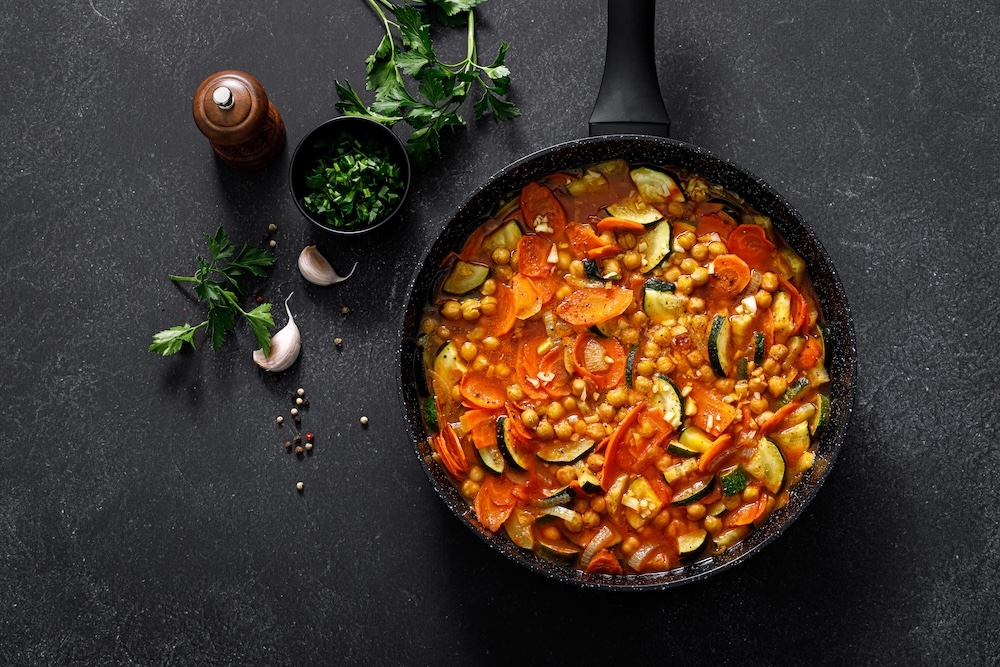
Recipe: Warming Autumn Chickpea & Vegetable Saute (Serves 4)
This simple and fragrant dinner is prepared using the principle of traditional spiced vegetable stews—similar to the Indian “poha-style”—making it fast, satisfying, and incredibly delicious.
Cooking time: 25 minutes.
What to buy for 4 servings:
- Boiled chickpeas (soaked overnight and cooked without salt) or lentils (rinsed) — 1 cup
- Potatoes or sweet potatoes (chopped) — 2 medium tubers
- Carrot (chopped) — a couple of pieces, depending on size and preference
- Diced/canned tomatoes (or chopped fresh tomatoes) — roughly 2 to 3 pieces
- Fresh ginger (grated) — a small piece
- Whole cumin seeds (jeera) — 1 teaspoon
- Turmeric — ⅓ teaspoon
- Ground cinnamon — ¼ teaspoon
- Ghee — approximately 2 tablespoons
- Salt and fresh herbs (parsley or cilantro) — to taste
Step-by-Step Instructions:
- Bloom the Spices (up to a couple of minutes): Heat the ghee in a deep skillet or saute pan. Add the cumin seeds and grated ginger. Fry for a few dozen seconds until an aromatic cloud appears.
- Add the Vegetables: Add the finely diced potatoes (or sweet potatoes) and carrots to the pan. Stir-frying for 3–5 minutes, then reduce the heat, add the turmeric and cinnamon, stir briefly, and pour in 1 cup of water. Cover everything with a lid and simmer until the vegetables are semi-soft (about 60% cooked, by eye).
- Unite the Flavors: Now add the pre-boiled unsalted chickpeas (or rinsed lentils) and chopped tomatoes to the pan. Only now add salt to taste. Simmer on low heat for another 10 minutes so that the vegetables and chickpeas are thoroughly infused with the spiced sauce, allowing the dish to become “mutually balanced” according to Ayurveda.
- Serving: Remove from heat and let it rest covered for about 5 minutes. Serve hot, garnished with fresh herbs. You can combine it with rice and pasta if desired.
Who Should Exercise Caution:
If you have a sensitive or “sharp” internal Agni, high acidity, or experience eructation (burping), it is worth reducing the amount of fresh ginger by half or replacing it with a pinch of dry ginger, as well as adjusting spices according to your current constitution and lifestyle.
Subscribe to our blog Gyana.org —here we share a lot about ancient practices, practical techniques, and Vedic sciences as applied to modern life.
Write to us if you need help applying ancient knowledge. You can also learn how to simply start applying Ayurveda in modern realities in our publisher’s book, “Ayurveda for Generations X, Y, Z,” published on the LitRes platform.


Leave a Reply